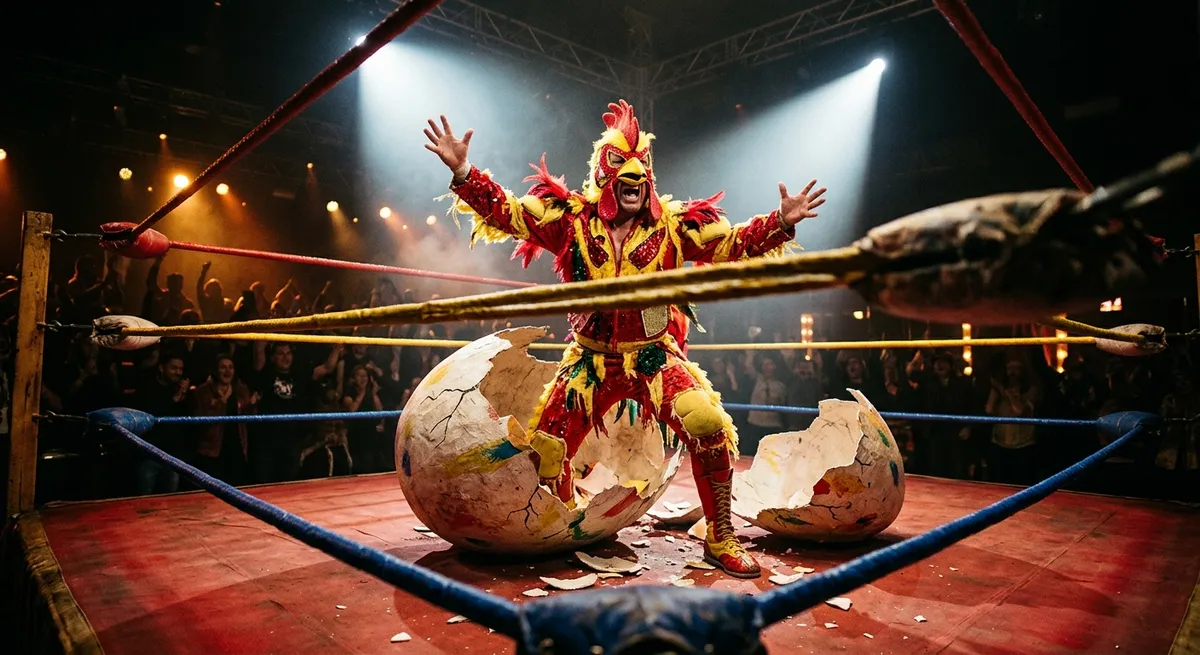
A Medium essay with a title that doubles as a thesis, "Professional Wrestling Is Stupid (And I Love It)," has been making the rounds. Its tagline gets right to the point: "Because sometimes the dumbest shit is the most fun." The piece celebrates wrestling's embrace of absurdity, spectacle, and over-the-top storytelling, and argues that the "stupidity" isn't a flaw to be excused. Per the essay, it's the whole point.
I can't tell you the essay's every beat, but the argument it makes is worth taking seriously, because it lands at a moment when wrestling fandom is, by the essay's account, having a cultural renaissance. Mainstream acceptance is up, streaming platforms are investing heavily in wrestling content, and younger viewers are discovering the genre without irony or shame.
So let's make the case. Wrestling is stupid. Wonderful. Moving on.
The Defense Rests on One Idea: Realism Was Never the Goal
The usual dunk on wrestling is some version of "it's fake." The essay's framing sidesteps that entirely. Wrestling isn't failing at realistic competition; it isn't attempting it. It's after something else: spectacle, melodrama, theatrical excess.
Once you accept that, the complaint stops making sense. Nobody walks out of an opera and says, "Honestly, people don't just sing their feelings." Nobody boos a superhero movie because capes aren't aerodynamic. We grant other genres their rules. Wrestling just asks for the same courtesy, usually while someone in sequins climbs a ladder.
Wrestling Is in Very Good Company
One of the angles the essay's framing invites is comparing wrestling to other beloved "silly" media: anime, superhero films, reality TV. It's a smart move, and it works because the overlap is obvious even without a stack of citations.
Think about what those genres share:
- Big emotions, delivered loudly. Nobody whispers a betrayal in anime. Nobody underplays a rivalry in wrestling.
- Heroes and villains with clear colors. You know who to cheer within seconds.
- Serialized drama that rewards loyalty. Reality TV runs on grudges and alliances. Wrestling invented a version of that and has been refining it for ages.
That last point is my read, not the essay's, but it's hard not to notice that the stuff we've decided is respectable fun (a superhero cinematic universe, say) runs on the same machinery: escalating feuds, dramatic reveals, a champion who might fall. Wrestling just does it live, in a smaller venue, with more spandex.
The Prestige-TV Hangover Argument
Here's the angle I find most convincing: wrestling as an antidote to prestige culture.
We live in an era where entertainment often comes with homework. There are limited series to keep up with, discourse to survive, and a vague sense that your leisure time should be improving you. Against that backdrop, a genre that cheerfully says "a man in a mask just hit another man with a chair, isn't this great?" is almost refreshing.
That's the heart of the "guilty pleasure" defense in the essay: the guilt is the bit you can drop. If something delights you, and nobody got hurt in the making of your delight (okay, the performers take real bumps, but that's their craft), you don't owe anyone an apology.
Why Younger Fans Are Showing Up Unembarrassed
According to the essay's framing, newer audiences are approaching wrestling without irony or shame. That's a notable shift. For a long time, the standard fan posture was a sort of defensive wink: I know, I know, but I like it.
A generation raised on fandom culture doesn't really do the wink. They grew up with fan edits, ship wars, and deep-lore wikis for everything. Being earnestly, loudly into something is the default setting. Wrestling, with its built-in lore and characters who feel like they were drawn by a committee of comic-book artists, fits that mindset neatly.
Meanwhile, with streaming platforms putting serious money into wrestling content, the genre has an easier on-ramp than ever. You no longer need a cable package and a friend who owns a stack of tapes. You can just press play and let the absurdity wash over you.
The Camp Is the Craft
It would be easy to read "stupid" as an insult. The essay flips it. The campiness, the melodrama, and the theatrical excess are what make the thing entertaining rather than something to apologize for.
There's real skill in that, and I'd add (as my own take) that being ridiculous convincingly is harder than it looks. Anyone can be silly. Making a crowd of thousands believe, for ninety seconds, that a staged confrontation matters more than anything else in the building? That's performance. The self-aware wink and the total commitment can coexist, and wrestling at its best does both at once.
That self-awareness has also, arguably, bled outward. Plenty of modern entertainment now leans on the same mix of sincerity and silliness, where a story can be goofy and still make you feel something. Whether wrestling deserves credit for that is a bigger debate than one essay can settle, but the family resemblance is hard to miss.
So, About That Guilt
The Medium essay's real contribution is permission. It tells readers that enjoying something loud, theatrical, and gloriously over the top doesn't require a defense brief or a disclaimer.
And honestly, that's the most wrestling thing about it. The genre has always understood that people don't need to be convinced something is realistic to be moved by it. They just need to be given a good story, a big entrance, and someone to boo.
If that's stupid, then fine. It's the kind of stupid that fills arenas, and the rest of entertainment could stand to be a little more shameless about it.