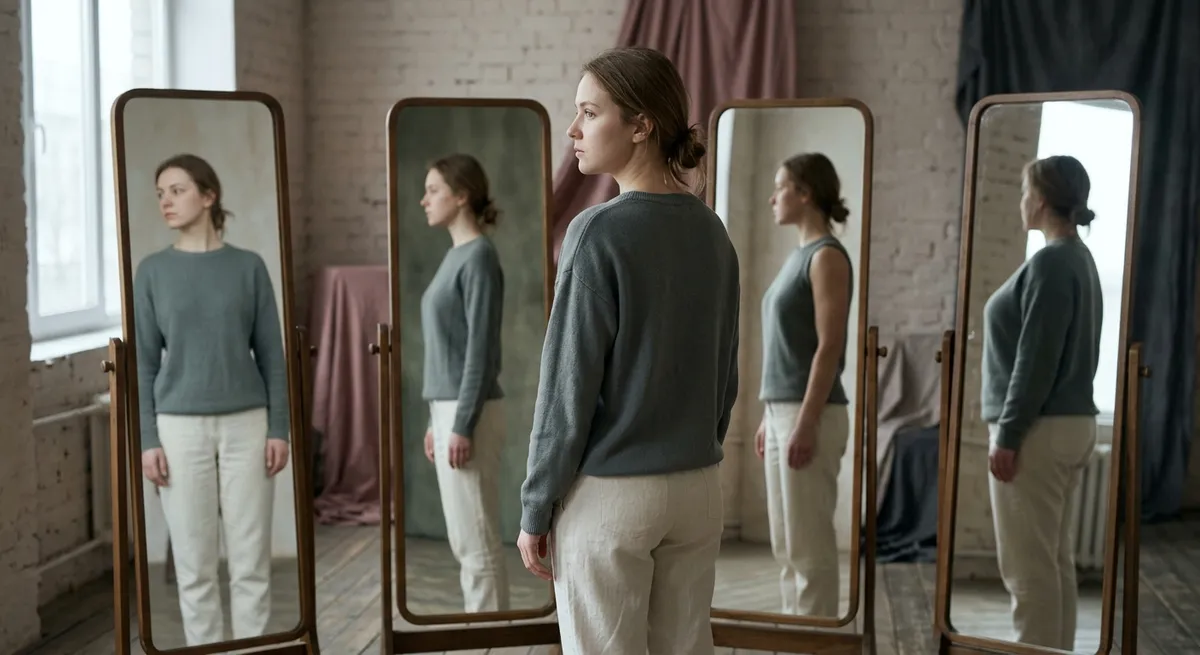
New research on young women in New Zealand, reported by Phys, finds that the body ideals they meet online don't just shift. They collide. Thin, curvy, toned, muscular, "fat-free" and "thick" are all being served up at once, often in the same scroll session.
That is the headline, and it's worth sitting with. This isn't the old story of one narrow beauty standard that everyone chases. It's a pile of standards that cancel each other out, and the person holding the phone is expected to satisfy every one of them.
The checklist nobody can finish
Per the Phys report, the research looks at how young New Zealand women experience these contradictory ideals online. Try reading the list as a single assignment: be thin, but curvy. Be toned, but also muscular. Be "fat-free," but "thick." It reads like a group project where every member submitted a different brief.
It's hard not to see the pop-culture pattern here. Beauty trends have always cycled, and anyone who lived through the eras of ultra-slim red carpets followed by the big-curves-are-in moment knows each one arrived with total confidence. What's different now is that nothing retires. The old ideal doesn't leave when the new one arrives; it stays in the feed, algorithmically alive, next to its opposite.
That's our take, not the researchers' finding. But the research does point to the same practical result: a young woman scrolling today isn't choosing between ideals, she's being shown all of them.
When empowerment comes with homework
Here's the part that makes this more than a "social media bad" story. According to the report, fitness and glow-up content can genuinely feel empowering. That matters, and it's easy to skip past. Plenty of people find motivation, community and real enjoyment in this material.
But the same content, the report says, can also fuel comparison, disordered eating, interest in cosmetic surgery, and pressure to optimize every part of life. The empowering and the harmful are not two separate categories of video. They can be the same video, watched by the same person, on the same afternoon.
That's the slippery thing about wellness and fitspiration culture. A routine pitched as self-care can start to function like a performance review. It's hard not to wonder where "I feel strong" ends and "I'm falling behind" begins, especially when the feed keeps raising the bar.
The glow-up, reconsidered
The "glow up" is the perfect example. On its face, it's a lovely idea: a transformation story, a before-and-after, a fresh chapter. It's practically a movie montage, and the internet has turned it into a genre.
But as a format it has a built-in problem. A glow-up implies that the "before" was something to fix. And unlike a film montage, which ends with a credits roll, the online version never gets a final scene. There's always another upgrade to film. The Phys report describes the wider pressure as one to optimize every part of life, and a glow-up with no finish line fits that description neatly.
This is our reading rather than a claim from the research, but it explains why the trend can feel motivating and exhausting in the same breath.
Why this isn't just a willpower problem
The coverage points to a reason this is landing now: social platforms remain a primary source of health, beauty and fitness advice, especially for young women. For many people, the feed isn't entertainment on the side. It's the textbook.
And algorithms, per the report's framing, keep amplifying unrealistic and ever-changing ideals. That shifts the conversation. If the machine is built to surface whatever keeps you watching, then telling users to simply log off is a thin answer. Digital detoxes can be a perfectly reasonable personal choice, but they don't touch the system producing the content. The wider debate, as the article frames it, is both a mental health concern and a question of platform accountability.
In other words, the burden shouldn't fall entirely on the 19-year-old who is being shown a contradictory body checklist by software.
What a smarter scroll looks like
The report for readers isn't "delete everything." A few practical habits follow naturally from the issues the research raises, and these are our suggestions rather than findings from the study:
- Notice the contradictions. If one account says thin is the goal and the next says thick is, the inconsistency is the tell. No single body can follow both scripts.
- Watch how a video makes you feel afterward. Motivated and curious is one thing. Behind and inadequate is another.
- Be wary of "optimize everything" language. When a routine covers sleep, skin, food, workouts and mindset all at once, it's selling a lifestyle, not a tip.
- Curate on purpose. Following, muting and unfollowing are small acts, but they shape what the algorithm hands you next.
The takeaway
Pop culture has always sold us a version of the perfect body, from magazine covers to movie posters. What this research suggests is that the sales pitch has quietly become self-contradicting, and the shop never closes. When every ideal is on offer at once, the real trick isn't hitting the target. It's noticing there was never a single target to begin with.