A growing share of young women are getting their health and wellness information from social media influencers, and TikTok is a big part of that story. That's the finding at the center of a piece originally reported by the American Council on Science and Health (ACSH) and republished by WomenDevision this week. The easy reaction is to roll your eyes and cue the "do your own research" jokes. The more interesting one is to ask why the feed is winning.
The short version, per the survey data the piece describes: it's convenient, it's motivating, and it's entertaining. Honestly, that's a better pitch than most waiting rooms can make.
The Three Things the Algorithm Gets Right
According to the report, the main reasons young women follow health influencers come down to three things: convenience, a desire for lifestyle change, and entertainment.
Take those one at a time, because each one is a feature that clinical care often lacks.
Convenience. A video is available at 11 p.m. on a Tuesday, when you're wondering about a symptom and your doctor's office is closed. No portal login, no hold music, no three-week wait.
Lifestyle motivation. Influencers sell a before and after, a routine, a vibe. A doctor's visit often delivers a diagnosis or a pamphlet. Only one of those feels like a makeover montage.
Entertainment. Health content on TikTok is competing with dance trends and cooking videos, so it has to be watchable. Medicine, historically, has not had to be.
It's hard not to see the pattern here: the platform isn't winning because young women are gullible. It's winning because it's built to be a good user experience, and a lot of health care isn't.
The Part That Isn't About Convenience
Here's where the story gets more serious. The survey data points to a meaningful minority of young women who follow influencers and also say they feel uncomfortable raising certain topics with a doctor. The report reads that as a signal that access and trust play a real role, not just a love of scrolling.
The piece also points to documented patterns of dismissal, diagnostic delays, and poor care experiences for women in medical settings. If you've been brushed off once, a creator who says "I had that too, here's what I learned" is going to sound a lot more appealing than a 12-minute appointment.
That's our read, not a statistic: the influencer isn't replacing the doctor so much as filling the silence the doctor left.
Why the Risk Is Real Anyway
None of this makes the feed a safe place to practice medicine. The report notes that engagement-driven algorithms make misinformation and uncredentialed advice spread easily. Those systems reward what keeps people watching, not what's accurate. A confident, charismatic claim travels further than a careful "it depends."
And "it depends" is, annoyingly, the honest answer to a lot of health questions.
So the problem isn't that young women are curious. It's that the most engaging voice and the most reliable voice are often not the same person.
So What Should Medicine Do?
The article's argument is that medicine shouldn't simply scold this behavior. Instead, it should compete with influencers on the things they're good at: accessibility, empathy, speed, and clarity.
That's a notably un-preachy take, and it's the right one. Telling people to stop using the thing they find easy and relatable has never once worked, in health or anywhere else. (Ask anyone who ever tried to ban a TV show their kid loved.)
What might competing look like? The report's framing points to a few directions, and we'll flag the specifics as our own interpretation of it:
- Plain language. If a clinician's explanation is harder to follow than a 60-second video, the video wins by default.
- Faster answers. Speed is part of the appeal, so waiting weeks for a response is a competitive disadvantage.
- A warmer tone. Empathy isn't a bonus feature. For people who've felt dismissed, it's the whole product.
How to Use the Feed Without Getting Used by It
The more useful takeaway for readers is the one the piece's own framing suggests: the goal isn't "TikTok is bad." It's using social health content wisely and advocating for yourself in real care. A few habits that fit that spirit:
Treat a video as a starting question, not an answer
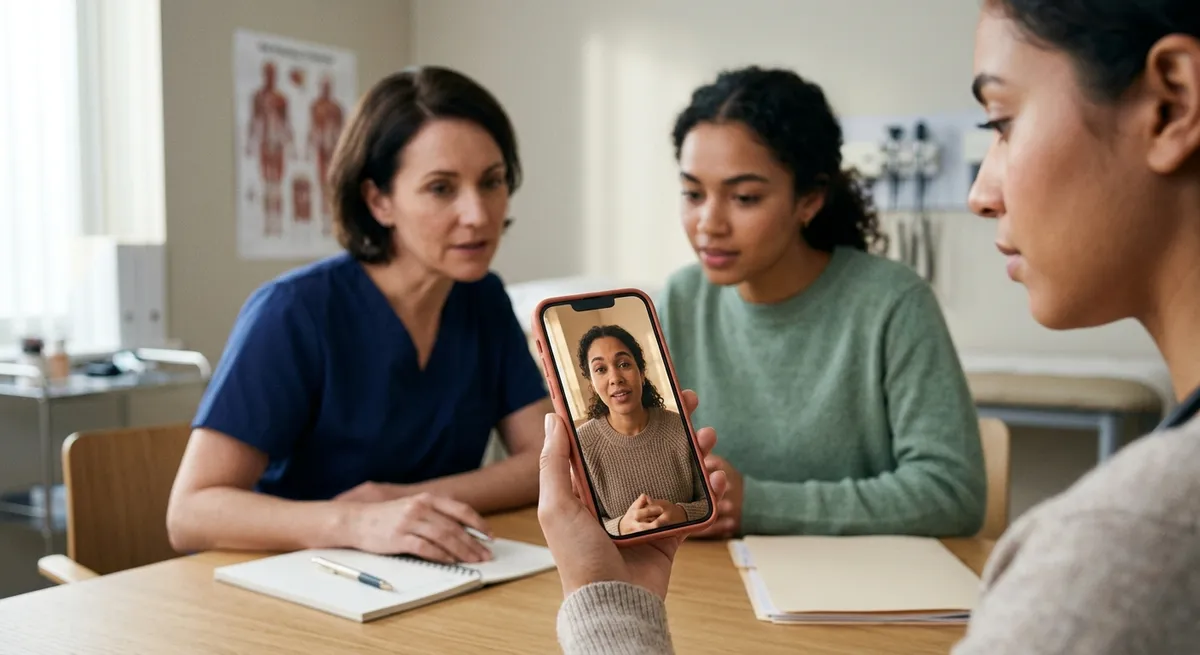
If something resonates, that's a good reason to bring it up with a clinician, not a reason to skip the clinician. "I saw this online and wondered if it applies to me" is a perfectly good way to open an appointment.
Check who's talking
The report flags uncredentialed advice as part of the problem. Look for whether the person has relevant training, and whether they're selling something. Relatable is not the same as qualified, and the best creators tend to make that distinction themselves.
Notice how certain it sounds
Our own rule of thumb: be wary of any claim that's delivered with total certainty and no caveats. Real medicine is full of caveats.
Bring the awkward topic anyway
If a subject feels uncomfortable to raise, that's exactly the one worth writing down before your appointment. Having the question in your notes app makes it harder to chicken out when the doctor walks in.
The Real Plot Twist
The headline version of this story is "young women trust influencers over doctors." The more accurate version, based on what the report lays out, is that people go where the answers are easy to get and the tone feels human. Wellness TikTok didn't invent that gap. It just built a very good storefront in front of it.
Which means the way to win people back isn't a better lecture. It's a better front door.
Originally reported by ACSH; republished via WomenDevision. This article is general information, not medical advice.