
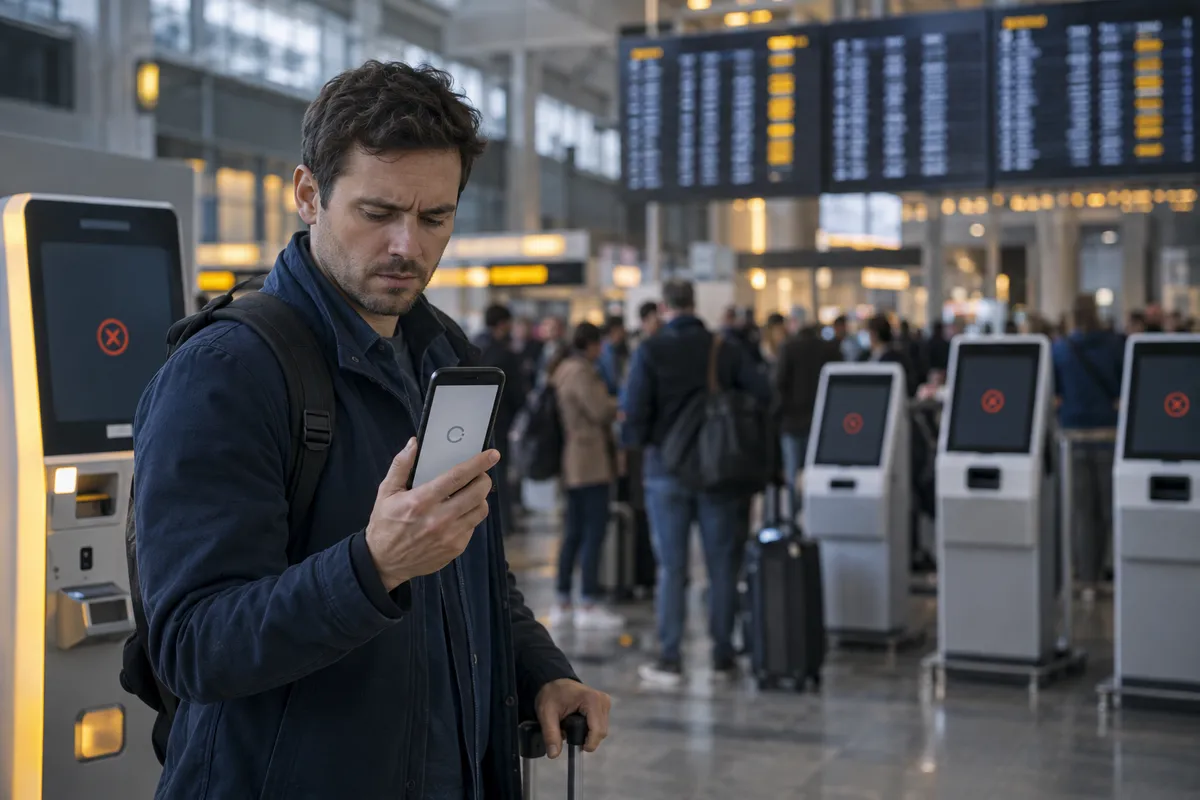
Everyone seems to be asking the same thing right now: what is going on? A CNN piece published this week looks at a blitz of tech outages and argues that the real worry isn't the inconvenience of a frozen app. It's how dependent Americans have become on digital systems that turn out to be a lot more fragile than they feel.
The details of each outage matter less here than the pattern. Per CNN's framing, the disruptions have touched platforms, services, payments, travel, and communications. That's nearly the whole list of things you need to function on a normal Tuesday.
Why It Feels Different This Time
Outages are not new. Anyone who has refreshed a streaming app on a Friday night knows the feeling. What CNN's piece points to is a shift in what an outage means. When a single app goes down, it's an annoyance. When payments, travel, and communications wobble in the same stretch, it starts to feel less like a glitch and more like a stress test nobody signed up for.
The timing, per the report, taps into broader anxiety about infrastructure resilience, cybersecurity, and the concentration of power in Big Tech. In other words, people aren't only asking why the thing broke. They're asking how many things depend on the same few things.
The Plot Twist: It's the Dependence
Pop culture has been rehearsing this scenario for years. Disaster movies and dystopian TV love the blackout premise, the moment the screens go dark and everyone realizes they don't know anyone's phone number. The difference now is that the real version doesn't need a villain or a meteor. It just needs a technical failure, and the fear CNN describes comes from how ordinary the trigger can be.
That's the angle worth sitting with: the scary part isn't a dramatic cyberattack so much as how much quietly rests on systems most of us never think about until they stop working. It's hard not to see the irony. We've built lives of enormous convenience on top of infrastructure we can't see, can't fix, and mostly can't choose.
The Everything-in-One-Place Problem
One of the risks the piece highlights is relying on a single tech ecosystem. That one is easy to relate to. Your photos, your payments, your work files, your messages, and your maps may all live under one login. That's wonderfully tidy right up until the day it isn't available.
This is my take rather than a finding from the report, but the logic is simple: convenience and fragility often arrive in the same box. The more seamless something feels, the less likely you are to have a plan for when it breaks.
A Low-Drama Backup Plan
CNN's framing leans toward preparedness, not panic, and that's the right instinct. These are common-sense ideas in the spirit of that conversation, not specifics from the report:
- Keep some cash on hand. If payments go down, a few bills still work.
- Save key information offline. Important numbers, addresses, and confirmations are worth having somewhere that doesn't need a connection.
- Don't rely on one channel. If one messaging or email service fails, know another way to reach the people who matter.
- Spread things out. Having every account tied to a single ecosystem makes one failure a bigger deal.
- Know your fallback for travel. Screenshots or printouts of tickets and reservations can save a stressful afternoon.
None of that is glamorous. It's the digital version of keeping a flashlight in a drawer.
What Outages Reveal
The broader lesson in CNN's piece is about what these disruptions say regarding American infrastructure. Digital systems now sit alongside roads and power lines as things we assume will simply be there. Unlike roads and power lines, they're often run by a small number of companies, which is exactly the concentration worry the report raises.
That doesn't mean the sky is falling. It means the conversation has moved from "why is my app broken?" to "what happens when a lot of apps break at once?" and that is a more grown-up question.
The Takeaway
We spent two decades being told to put everything in the cloud, and we did it with enthusiasm. The recent run of outages is a reminder that the cloud is someone else's computer, and someone else's computer can have a bad day. The smartest response isn't to log off for good. It's to keep a paper copy of the things you can't afford to lose access to, and to remember that the most dramatic plot twist in any blackout story is how fast we discover we have no Plan B.